Filed under 2 Parish News, English, Photos / Фото
Tags: Carlton, Talk
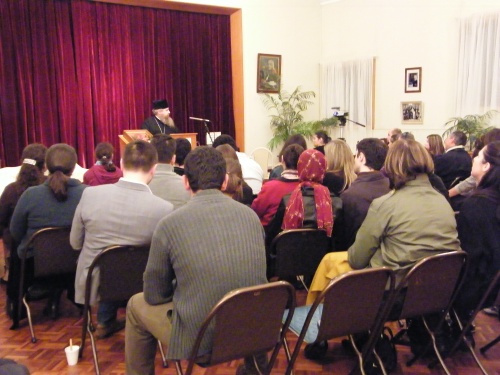
A continuation of last month’s Talk by Priestmonk Kosmas, How Does One Overcome Coldness and Deadness in the Spiritual Life? will be held in the hall of the parish of St George Church, Carlton, at 6pm. The Paraklesis to Our Lady Theotokos, Quick to Hear, will be sung in English beforehand at 4.45pm. A copy of the wonderworking icon Quick to Hear will be given out to all those present. (more…)
Filed under 1 Diocesan News, English, Photos / Фото
Tags: Pilgrimage, Ukraine
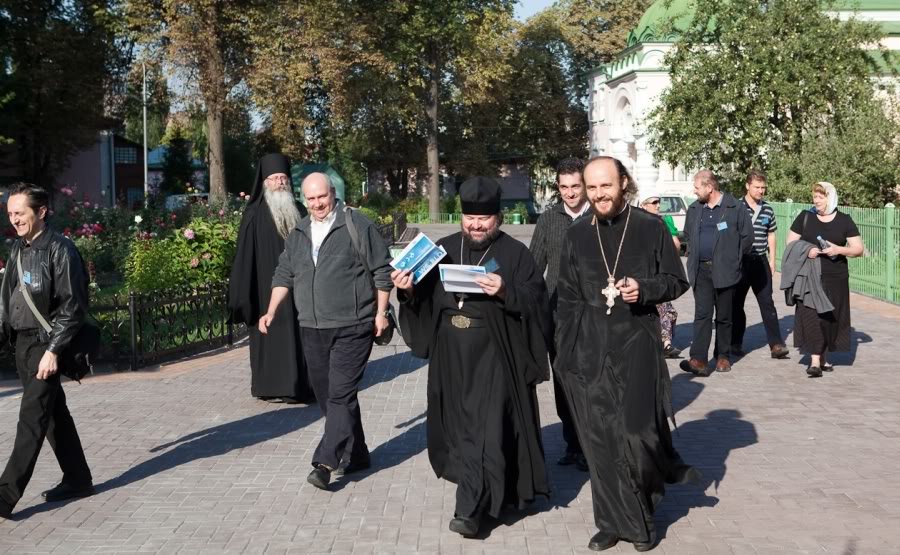
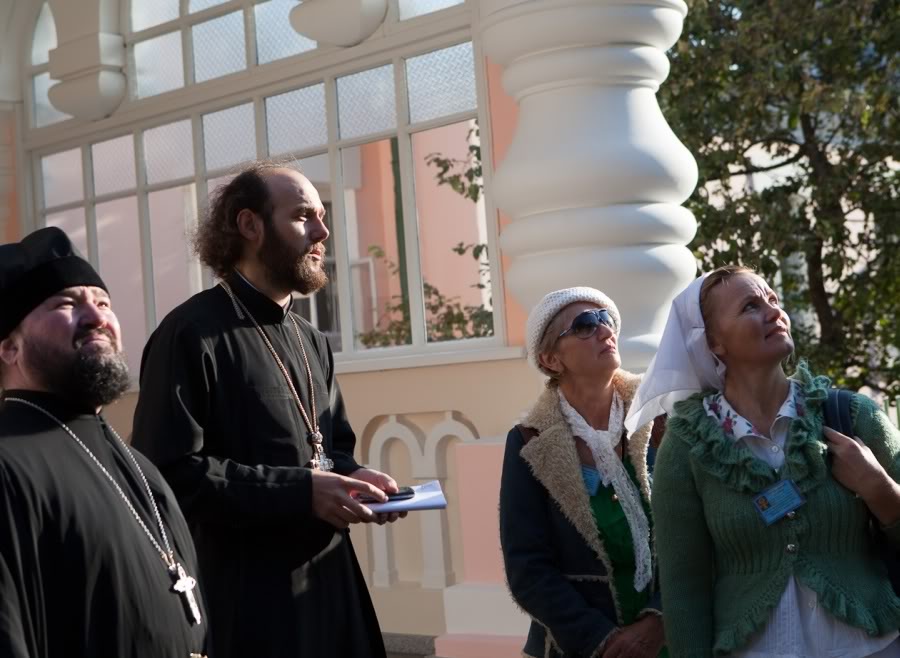
1. Arriving at Holy Protection convent:
2. Our Kiev guide Fr Vasily:
 (more…)
Filed under 3 Articles & Sermons, English
Tags: Sermon
16th Sunday after Pentecost – Parable about the Talents
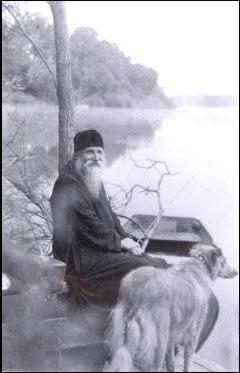
Homily From “The One Thing Needful,” Sermons of Archbishop Andrei (Rymarenko)
 “We then, as workers together with Him, beseech you also that ye accept not the grace of God in vain. (For He saith, I have heard thee in a time accepted, and in the day of salvation have I succored thee: behold, now is the accepted time; behold, now is the day of salvation)” (II Cor. 6:1-2).
So says the Apostle this day. And the Gospel tells us that a lord gave talents to his servants: “Unto one he gave five talents, to another two, and to another one; to every one according to his several ability; and straightway took his journey…. After a long time the lord of those ser-vants cometh, and reckoneth with them” (Mt. 25:14-19).
So says the parable. How does it apply to us? To us the Lord has also given talents. And essentially the talent is one. What is it? This is what it is. As we heard last Sunday, the entire law and the prophets are concentrated into one commandment: “Thou shalt love the Lord thy God with all thy heart, and with all thy soul, and with all thy mind….[and] Thou shalt love thy neighbor as thyself (Mt. 22:37, 39). (more…)
Filed under 3 Articles & Sermons, English
Tags: Scripture
16th Sunday after Pentecost – The Exaltation of the Precious and Life-giving Cross
VESPERS
Exodus 15:22-27; 16:1-2
22 So Moses brought Israel from the Red sea, and they went out into the wilderness of Shur; and they went three days in the wilderness, and found no water. 23 And when they came to Marah, they could not drink of the waters of Marah, for they were bitter: therefore the name of it was called Marah. 24 And the people murmured against Moses, saying, What shall we drink? 25 And he cried unto the LORD; and the LORD shewed him a tree, which when he had cast into the waters, the waters were made sweet: there he made for them a statute and an ordinance, and there he proved them, 26 And said, If thou wilt diligently hearken to the voice of the LORD thy God, and wilt do that which is right in his sight, and wilt give ear to his commandments, and keep all his statutes, I will put none of these diseases upon thee, which I have brought upon the Egyptians: for I am the LORD that healeth thee. 27 And they came to Elim, where were twelve wells of water, and threescore and ten palm trees: and they encamped there by the waters. 1 And they took their journey from Elim, and all the congregation of the children of Israel came unto the wilderness of Sin, which is between Elim and Sinai, on the fifteenth day of the second month after their departing out of the land of Egypt. 2 And the whole congregation of the children of Israel murmured against Moses and Aaron in the wilderness: (more…)
Filed under 1 Diocesan News, English, Photos / Фото
Tags: Pilgrimage, Ukraine
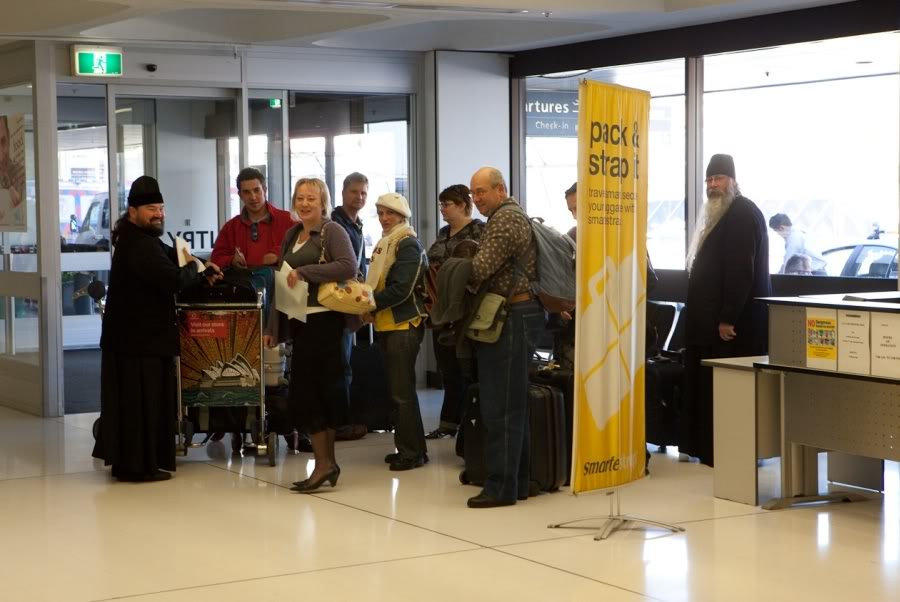
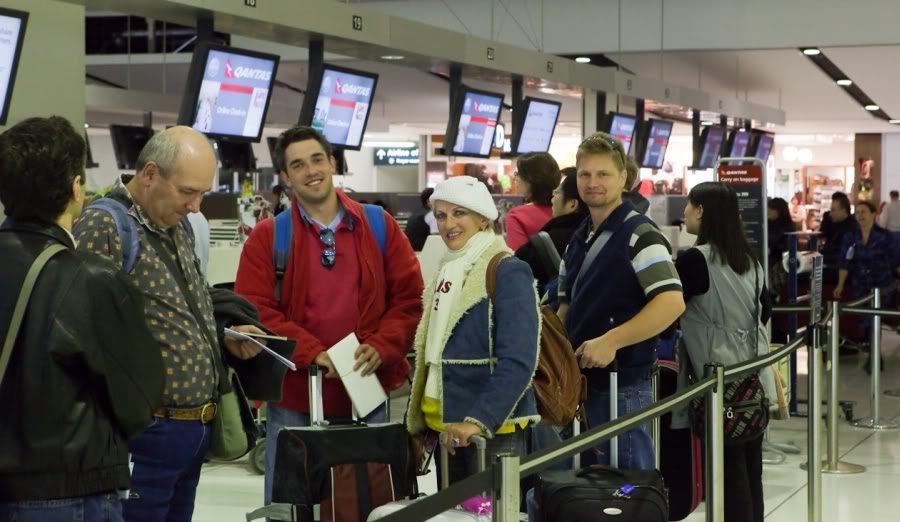
1. Leaving Sydney:
2. Great anticipation:
 (more…)
Filed under 3 Articles & Sermons, English
Tags: Sermon
15th Sunday after Pentecost – the Great Commandment
Homily From “The One Thing Needful,” Sermons of Archbishop Andrei (Rymarenko)
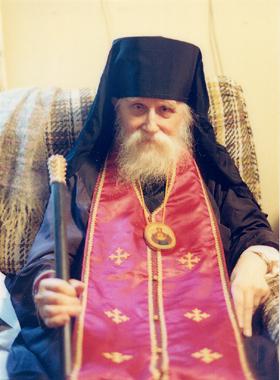 “Then one of them, which was a lawyer, asked Him a question, tempting Him, and saying, Master, which is the great commandment in the law?” (Mt. 22:35).
If you were attentive to how the Holy Church, revealing to us the mystery of our salvation, gradually shows us in the Sunday Gospel readings the way of resurrection for the human soul, then you also noticed that starting from Easter until today there were several cycles. One of these cycles convinced us that the Lord is our Savior, our Savior from sin, and that He is All-powerful. And further we were shown the dispositions, the states of mind which should be in the soul of every Christian, in order to perceive that power which the Lord has given to us, establishing our salvation in the plan of eternal life. These Gospel readings opened to us the feeling of humility and devotion to God, in understanding the Word of God as acting in our life. And then these cycles changed into others, and we came to a cycle which revealed that all this which God gives us can be accomplished, but only within the limits of the Church. Like the boat in which the Apostles were sailing, it preserved the Apostles. And this boat was like the laws in which lived and lives the Church, which protects those who are in the boat from all the troubles that occur outside of it. (more…)
Filed under 3 Articles & Sermons, English
Tags: Scripture
15th Sunday after Pentecost
MATINS (IV)
Luke 24:1-12
1 Now on the first day of the week, very early in the morning, they, and certain other women with them, came to the tomb bringing the spices which they had prepared. 2 But they found the stone rolled away from the tomb. 3 Then they went in and did not find the body of the Lord Jesus. 4 And it happened, as they were greatly perplexed about this, that behold, two men stood by them in shining garments. 5 Then, as they were afraid and bowed their faces to the earth, they said to them, “Why do you seek the living among the dead? 6 He is not here, but is risen! Remember how He spoke to you when He was still in Galilee, 7 saying, ‘The Son of Man must be delivered into the hands of sinful men, and be crucified, and the third day rise again.’ 8 And they remembered His words. 9 Then they returned from the tomb and told all these things to the eleven and to all the rest. 10 It was Mary Magdalene, Joanna, Mary the mother of James, and the other women with them, who told these things to the apostles. 11 And their words seemed to them like idle tales, and they did not believe them. 12 But Peter arose and ran to the tomb; and stooping down, he saw the linen cloths lying by themselves; and he departed, marveling to himself at what had happened. (more…)
Filed under 3 Articles & Sermons, English
Tags: Sermon
14th Sunday after Pentecost – the Wedding Feast
Homily From “The One Thing Needful,” Sermons of Archbishop Andrei (Rymarenko)
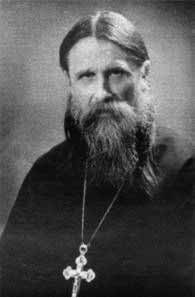 “So those servants went out into the highways, and gathered together all as many as they found, both bad and good: and the wedding was furnished with guests. And when the king came in to see the guests, he saw there a man which had not on a wedding garment: and he saith unto him, Friend, how earnest thou in hither not having a wedding garment? And he was speechless. Then said the king to the servants, Bind him hand and foot, and take him away, and cast him into outer darkness; there shall be weeping and gnashing of teeth” (Mt. 22:10-13).
Such a Gospel the Holy Church offers today for our attention: the Gospel about the wedding feast. And here is the section which refers to both the good and the evil ones who gathered at the meal. And when the lord entered, he found one man who was not dressed in a wedding garment. And just for this, that he was not wearing a wedding garment, such a terrible punishment followed. He was thrown out, bound, and was cast into a place of fire. For us this may even be incomprehensible. What is this actually? (more…)
Filed under 3 Articles & Sermons, English
Tags: Scripture
14th Sunday after Pentecost
MATINS (III)
Mark 16:9-20
9 Now when He rose early on the first day of the week, He appeared first to Mary Magdalene, out of whom He had cast seven demons. 10 She went and told those who had been with Him, as they mourned and wept. 11 And when they heard that He was alive and had been seen by her, they did not believe. 12 After that, He appeared in another form to two of them as they walked and went into the country. 13 And they went and told it to the rest, but they did not believe them either. 14 Later He appeared to the eleven as they sat at the table; and He rebuked their unbelief and hardness of heart, because they did not believe those who had seen Him after He had risen. 15 And He said to them, “Go into all the world and preach the gospel to every creature. 16 He who believes and is baptized will be saved; but he who does not believe will be condemned. 17 And these signs will follow those who believe: In My name they will cast out demons; they will speak with new tongues; 18 they will take up serpents; and if they drink anything deadly, it will by no means hurt them; they will lay hands on the sick, and they will recover. 19 So then, after the Lord had spoken to them, He was received up into heaven, and sat down at the right hand of God. 20 And they went out and preached everywhere, the Lord working with them and confirming the word through the accompanying signs. Amen. (more…)
Filed under 3 Articles & Sermons, English
Tags: Sermon
13th Sunday after Pentecost – the Vineyard Workers
Homily From “The One Thing Needful,” Sermons of Archbishop Andrei (Rymarenko)
“It will be hard for a rich man to enter the Kingdom of Heaven,” said Christ to His disciples. If you recall, last Sunday these same words appeared at the end of the Gospel reading. A young man approached Christ and asked, What should I do in order to inherit the Kingdom of Heaven? Then the Lord answered him: Fulfill the commandments. And when the young man said that he had already done this, then the Lord, seeing his heart, said: Give away whatever you have. But the young man was rich, and for him his riches were the power that gave him status in society, and therefore he bent his head and walked away. Here Christ said to His disciples: “Truly I say unto you, it will be hard for a rich man to enter the Kingdom of Heaven” (Mt. 19:16-23). (more…)

 Sts Cyril and Methodius Orthodox Institute